

Want to stay caught up in all things agriculture? Sign up for the newsletter and get all the latest news straight to your inbox.

Farm Lifecycle,
Integrated Perspectives,
Grower Insights
Passing Down More Than Land: The Legacy of Family Farming
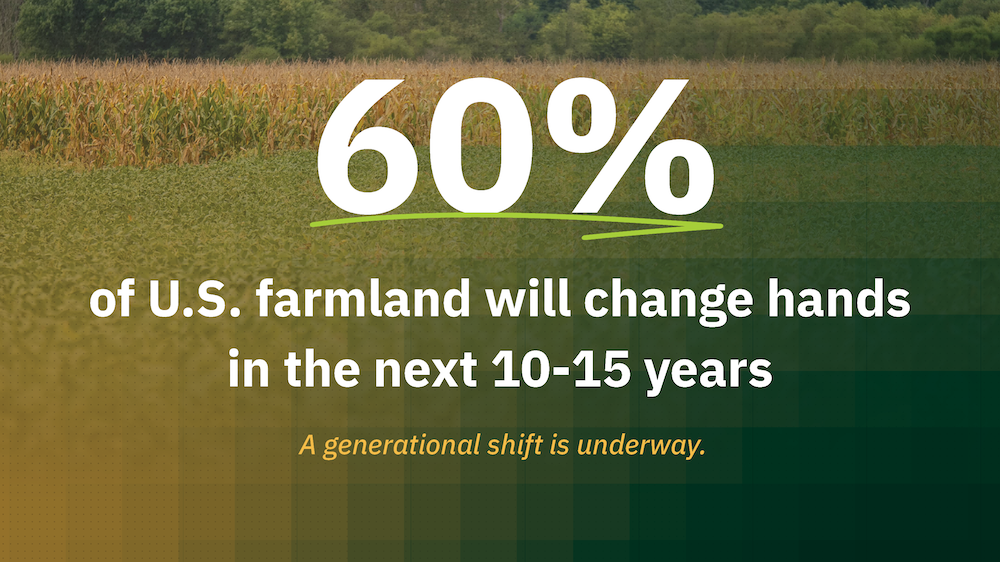
American agriculture is on the brink of a generational transition. It’s estimated that over 60% of American farmland will change hands in the next 10-15 years. The median age of an American farmer is currently 58 years old.
At the same time, we’re in the middle of a market downturn that is disproportionately affecting small- and mid-sized farming operations, many of which are family-run with generations of history behind them.
For family farms, these shifts raise urgent questions about ownership, identity, continuity and legacy. As land becomes more expensive and margins tighter, preserving a family farm will require more than hard work. If you’re running an operation like this, it’s critical to have intentional planning, honest conversations, and conviction to make difficult decisions about what legacy means to you.
Consolidation may threaten the family farm's identity
The hard truth is that consolidation pressures are reshaping the ag industry, pushing more land and production into fewer and larger operations. In the latest 2026 report of the top 100 landowners in the U.S., the operation in the 100th spot is nearly 100,000 acres more than the operation that held the same position in 2007.
The pattern is familiar across agricultural sectors. Nederhoff says hog production in Iowa is a prime example of how consolidation trends impact production. Where Iowa farmers once raised pigs as part of diversified operations, the 1980s brought a wave of consolidation. Today, corporate entities dominate that market. "Very few people independently raise pigs anymore," Nederhoff explains. "It's just the nature of many industries. You have to streamline to grow and you have to grow to keep up."
Nederhoff sees more seasoned farmers recognizing a similar trajectory in grain farming. "You have to farm more acres to be competitive anymore, to keep growing without outside income."
But what happens when you’ve reached your operation’s limit and you’re putting in everything you have just to make ends meet? What does it mean for the ag industry — and rural culture — if consolidation trends pick up and we see the identities of these smaller and mid-sized family farming operations disappear?
"As soon as we lose our identity as being family-oriented, where the family name is replaced by a logo, that's when we're going to see the biggest struggle and shift in our cultural identity, that farming and family are no longer as ingrained in rural culture," Nederhoff warns.
While consolidation pressures mount, the industry can't afford to lose sight of the families with surnames passed down over generations who are behind the farmland. Proactive succession planning can help families navigate these challenges and safeguard the familial foundation our industry was built on.
Preserving the family farm with proactive succession planning
With so much land changing hands and the average age of farmers increasing, it’s more important than ever to have a succession plan in place, regardless of where you are in your career path.
Start the process of succession planning by establishing a practical framework to lay out all the options and chart a path forward. “The first step is to ask some important questions, and do so early, to help identify a viable path forward,” says Nederhoff. “Is there somebody who wants to take over your farmland? Is there somebody you could rent it to? Do you want–or need–to sell it to retire? What’s the timeline for retirement and hanging things up when it comes to farming? What is your end goal?"
Rudy’s family recently went through this process. “Succession planning for us started early when we talked with our kids about the operation,” she said. “We laid out the acres, the cash rent, five years of records, and walked through the good years and the tough ones.”
It’s a good reminder of the power of numbers and how important it is to keep good records so you have that historical context to weigh big decisions. “When we put the numbers on the table and talked honestly about costs, taxes, and equipment, we could see our options and start to think about what moves would make the most sense for us,” explains Rudy.
There are different considerations for each generation of farmers. Read The Evolution of Farm Financing: Insights Across the Generations to see tips for different generations.
For Meeks, his family's approach to succession planning has been supportive: "My parents were always open to us exploring off-farm jobs, but always made it known they’d love for us to return to farm one day. That's always been the outlook in Meeks’ household. For my brother and myself, we never felt like we had to return to the farm."
Once you have an idea of what your options look like, you can start to see that vision for the future of the land. At that stage, it’s a good idea to involve legal experts who can help you formalize your plans.
Making the right transition decisions
It’s important to note, not every next-generation farmer will return to the operation full-time. “Farming is a stressful job,” says Meeks. “We work extremely hard all year long. There is little downtime, and yet variables outside our control often dictate our success. Maybe I don't farm just to make sure that the farm is successful," he said, acknowledging that putting a mid-sized farm in a position to provide for multiple families can strain profitability, and it might not be the right course.
“We’ll work hard and not get paid, which is not a great advertisement to inspire the next generation to continue, but as much as we love it — there is truly nothing better than watching the sunset in the field with your family during harvest season — it’s good to remember that you can love it from a far.”
This was the case for Rudy’s family. “It was a gut-wrenching decision, but after a lot of careful consideration — factoring in variables about the cost of success and being really clear about what we were, and weren’t willing to sacrifice to continue our farming operation — we decided the legacy of our family farm would continue in name only. After seeing how much I sacrificed for years, working two full-time jobs to keep our operation running, my kids decided they wanted a different lifestyle, one that prioritizes work-life balance, where they aren’t beholden to the responsibilities required to run a successful family farming operation.”
At the end of the day, you cannot use a one-size-fits-all approach to decide what’s next for your operation. The decision is personal, likely for more than a few individuals. There is a tension for a lot of people between continuing a legacy and establishing, or extending, financial security. “For a lot of growers, their farmland is their retirement. They don't have a 401(k) they can lean on. It's hard to tell an older farmer what to do, because he has to look out for himself too," explains Nederhoff.
So, what can you do? Start with an honest discussion about what success looks like for you, for the generation above and below you. Big transitions require transparency and open conversation, particularly when they carry so much emotional weight and impact multiple generations.
"Transitioning land ownership can be a pride thing,” says Nederhoff. “Maybe your family's owned some of this land for nearly a century. There’s a lot of pride in preserving a long legacy like that, to hold on to it.”
These may not be the easiest conversations to have, but they are essential to understand the goals, perspectives and concerns of various family members. It provides the information needed to weigh your options.
Along with conversation, you also need to take an analytical approach and review your numbers. Pull together five to eight years of financial records and consider what the realistic costs are to keep your operation running. This means accounting for operational expenses alongside family spending — healthcare coverage, tax obligations, household costs. A thorough financial assessment will reveal whether continuing is viable or if alternative paths make more sense for your family's future.
The Path Forward: Passing down what matters most
For most growers, the farm and the land are both equal elements of a family’s legacy. “Farming is a generational career,” says Territory Manager Jacquelyn Fernandes. “Creating and carrying on a legacy tends to be part of the farmer’s job description, and that aspect of it is a big motivator for a lot of growers.”
Motivation aside, the economic realities of farming today are making it very difficult for many family-run operations to find a viable path to continue. There are some creative solutions out there, whether it’s engaging in more grower partnerships and co-op arrangements — where different operations might share equipment and coordinate planting and harvesting schedules to share the cost-burden — or finding partners or investors who can help fill resource gaps. The biggest takeaway is simply that today’s family farming operations need to define success on their own terms because it looks different for today’s growers than it did for their parents or grandparents.
And just as growers today have to redefine success, it’s also important to keep an open mind about how you preserve the legacy of a family farm. For Rudy, that meant turning the page on her family’s legacy. She’s still involved in the ag sector, as are her children, but in their new chapter, they aren’t running her family farming operation. And she’s OK with that. She knows the legacy of her family farm won’t disappear simply because they aren’t farming. “There’s a difference in the family farm staying in the family name versus farming as a family, and that distinction is what helped us make the transition."
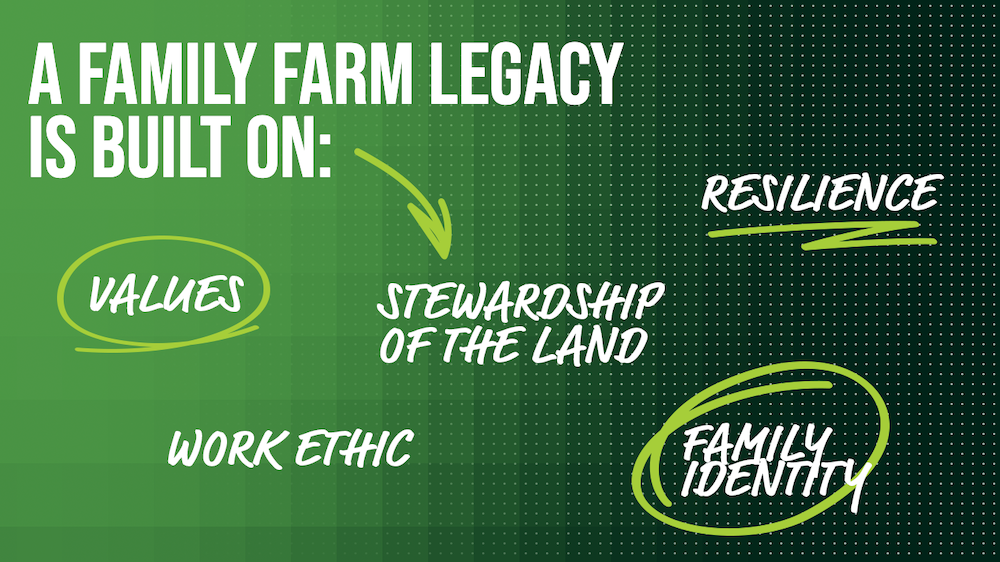
Rudy’s family legacy lives on in the values her grandfather instilled in her, which she passed along to her children, who will undoubtedly do the same, regardless of what career path they choose. That’s the beauty of family farming: because of how engrained farm, land and legacy are, even without the farm, the legacy can endure.
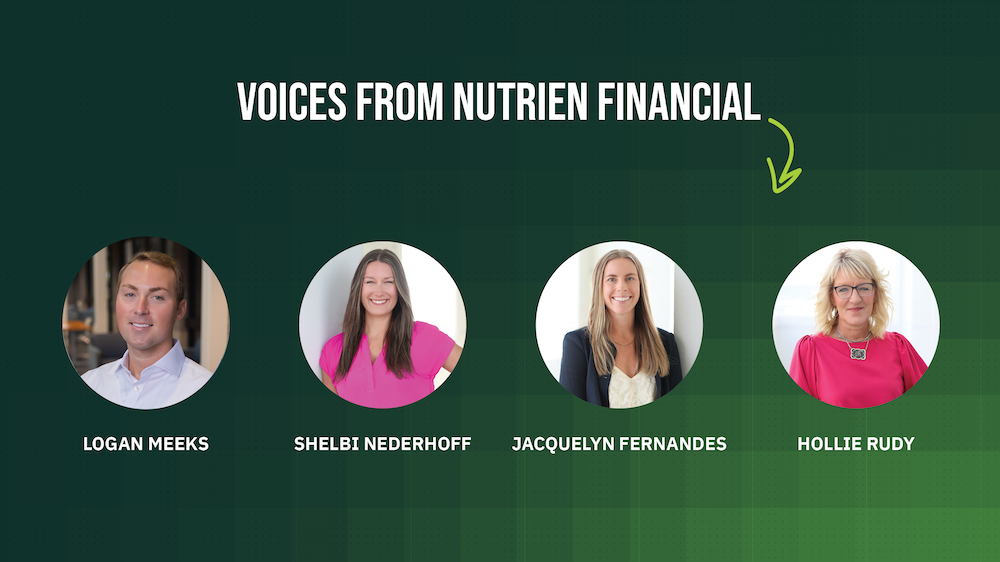
Contributors to this article include:
Logan Meeks, territory manager supporting Nutrien customers in Tennessee, Kentucky and Indiana. Meeks also works with family members on a 4th generation farming operation that grows corn, cotton, soybeans and wheat in rural west TN.
Shelbi Nederhoff, territory manager supporting customers in Illinois, Wisconsin, and a portion of Iowa.
Jacquelyn Fernandes, territory manager supporting Nutrien customers in the western U.S., including California and Arizona. Jacquelyn grew up on a family dairy farming operation and northern California.
Hollie Rudy, territory manager supporting customers in Minnesota, the Dakotas and Western Iowa. Rudy and her family recently made the decision that their family’s 1,800-acre row crop and cow-calf farm would not pass down to the next generation.
FEATURED LINKS
NEWSLETTER