

Want to stay caught up in all things agriculture? Sign up for the newsletter and get all the latest news straight to your inbox.

Farm Lifecycle,
Integrated Perspectives,
Grower Insights
Redefining Success for the Next Generation of Farmers
What does success in farming look like today, and why is it harder to achieve?
Young farmers entering the ag industry today face a different reality than past generations. The path to success is not what it was for their parents and grandparents. It costs more to run an operation, and especially in the current market, margins are razor thin.
These are not fundamentally new challenges for growers, but what’s changed is the expectations around work, family, and financial security. Young growers are balancing the realities of running a farm with the desire for stability, flexibility, and a sustainable quality of life. Our appetites for sacrifice are more discerning. This is forcing a fundamental shift in how growers define success, and the tools and resources they need to get there.
We spoke with two territory managers at Nutrien Financial – Logan Meeks and Hollie Rudy – both of whom have been involved in family farming operations at various stages in their careers for insights on how the industry has changed, and what you need to be successful in the future.
“Most younger growers now are facing tight or even potential negative margins while they’re still getting their footing,” says Meeks. “This generation isn’t the first to begin farming in trying times, but if you look at the increased costs of running a farming operation, in addition to these tight margins, younger growers are struggling to put equity on their balance sheets.”
Success in farming looks different today than a generation ago
For previous generations, success often meant working hard, owning land free and clear, collecting rent checks. Today, hard work alone isn't enough. Farmers need marketing skills, technology adoption, business savvy, and diversified income streams (e.g., trucking, livestock, off-farm work) to weather market volatility. Other important differences between success now and a generation ago include:
Lifestyle & Economic Shifts.
The world moves at a much faster pace. We are career-driven; our lifestyles are different, and for most family farming operations, it’s difficult — if not impossible — to depend exclusively on the farm to sustain our livelihood.
“Forty years ago, my mom and dad raised two kids on our row crop and livestock farm, and my mom was a homemaker,” recalls Rudy. “We had a wood-burning stove. We chopped wood. We canned all of our own goods. We lived a very different lifestyle than what my kids experienced growing up on the farm in the last decade.”
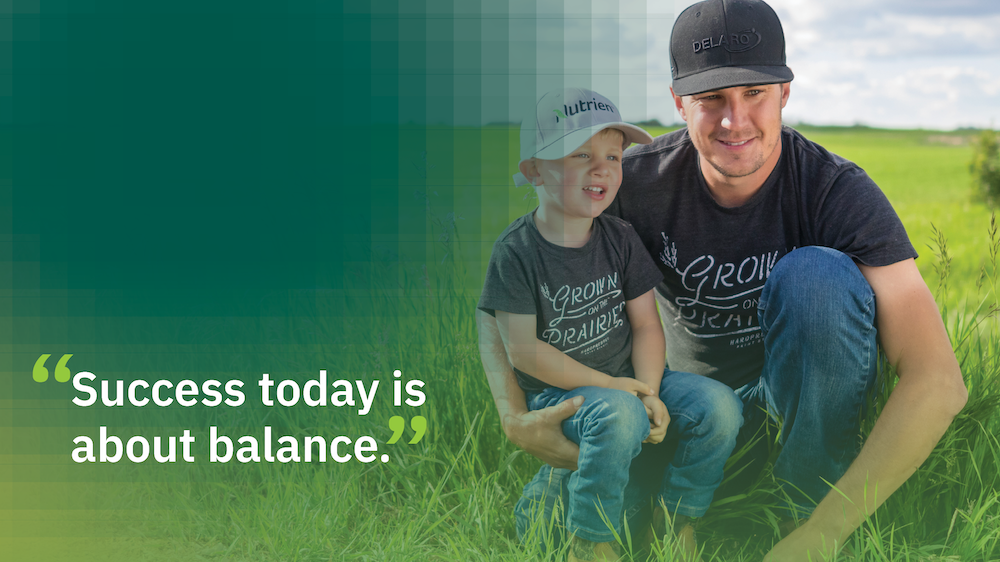
Farming as a way of life has always required hard work and sacrifice, but the path to success was not as steep as it is today. “It becomes a balance of where does the sacrifice end in order for life to be healthy, happy and balanced,” Rudy says.
Technology Revolution.
Given these economic and lifestyle shifts, it’s clear that working hard is no longer enough to be successful. Growers depend on technology as a tool to impact success more than ever. Today, we have tools like fungicides and seed varieties that help to optimize yields. Technology has enabled more powerful machinery in fields with more precise positioning to plant and spray efficiently. Technology has also changed the playbook by providing access to extensive data and analytics, reducing the need for guesswork and giving growers more control.
As Meeks explains, “Come harvest, my granddad used his best judgement to estimate what harvest would equate to when he was running the harvester, hoping the yield monitor was close enough to trust, but he wouldn’t know what he had until all the grain was hauled to the elevator. Whereas my dad and my uncle came into the farm with better technology that allowed them to estimate nickels and dimes, although they still rely heavily on end of delivery grain tickets. Now, my generation, we have AI that can predict yields weeks before harvest. Today’s harvesters are more accurate than ever, and grain wagons can provide you with instant weights from their built-in scales. My cousin and I can be 100 miles away and remote into our harvesters to watch in real-time as our dads are running the machines.”
These advances in technology provide more tools for farm managers to do their job with added accuracy and efficiency. Where his grandfather measured success simply as "a great year, a good year, or not so great," Meeks and his family now track performance down to the second decimal point, the instant crops are harvested. "We have the ability to use hard data to drive decisions,” Meeks explains. "And that new era of data management allows us to make better decisions than ever before.
To be a successful grower today, you also have to appreciate that having a strong yield is only one piece of the puzzle. You need to be an expert in your farm finances, tracking your breakeven point, taking action to maintain good credit, strategically managing your available capital to maintain and optimize cash flow, and making smart investments to increase ROI. Skills to build a budget and market a crop effectively are also part of today’s reality. The list goes on.
“It's a different time in the ag industry,” notes Meeks. “If I told my granddad I was looking to buy a farm, he would ask, ‘Is it good soil or bad?’ He’d probably check an interest rate or two, and maybe ask neighbors how the crops have been performing. For me, I’m requesting yield data, fertility records, and new soil tests. I’m running projections on proven records, finding the breakeven yield and evaluating down payment options to make the land purchase viable, and I’m using data to the second decimal, down to the bushel and the pounds because that’s the level of detail and accuracy I need to ensure my financial wellbeing.”
Using hard data to project outcomes is something the past generation of growers has only recently been learning to do. Young growers have that skill out of the gate, which is important because, as Meeks explains, “it’s not enough to just collect the data, you also need to act on it to make profitable decisions.”
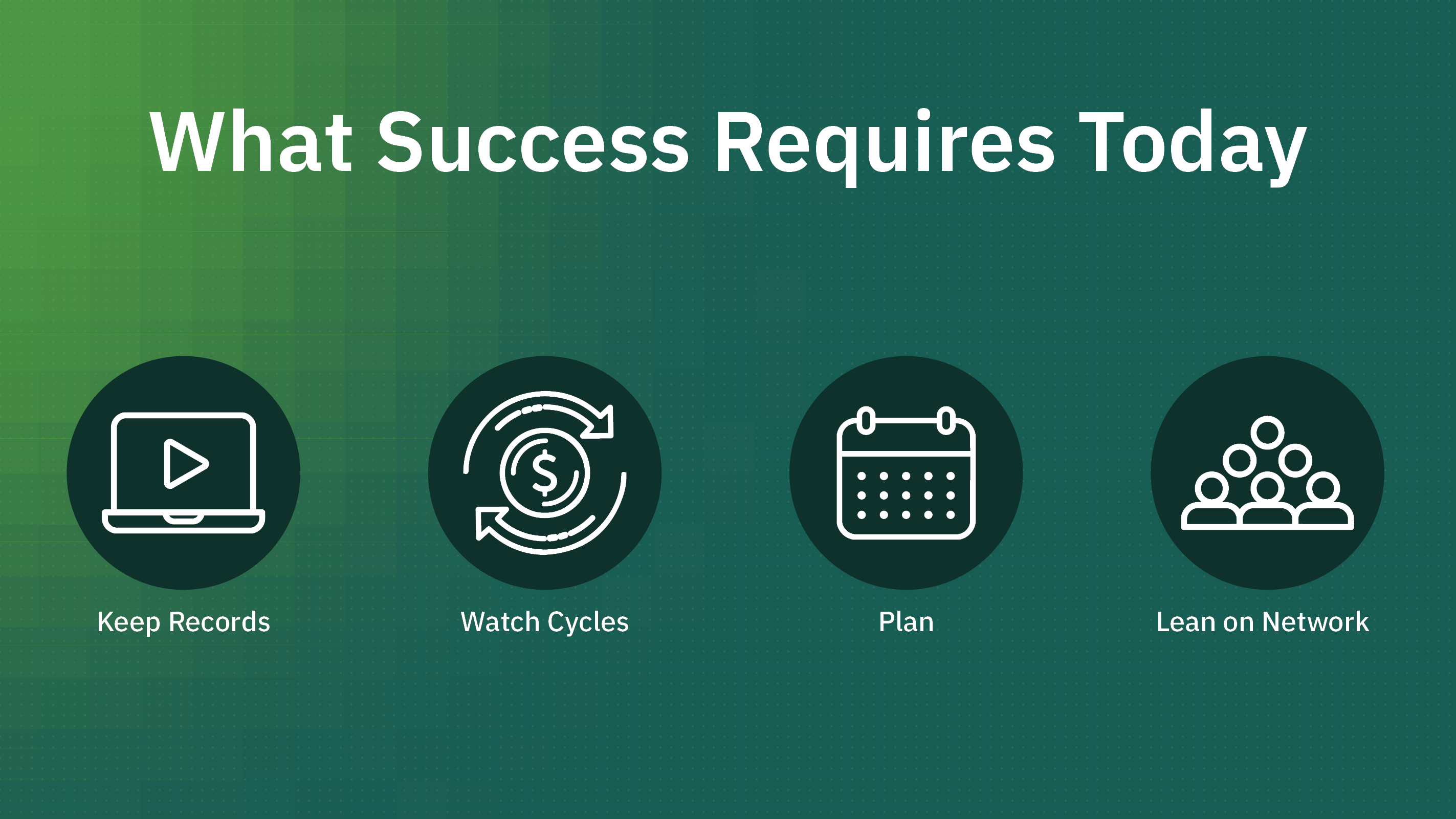
4 Tips to succeed today
1. Be proactive. Keep records. The specific system matters less than the habit itself—consistent record-keeping helps you understand what worked (and what didn’t) in both good years and tough ones, and builds valuable historical context.
An agronomic plan can inform a financial plan and accompanying marketing plan. “The business side of farming is a priority now, to the point that you have to know where you're getting your capital from, whether to use nontraditional lending options, when your due dates are to pay all these different expenses,” says Meeks.
Similarly, marketing plans play an important role. "A marketing plan gives you some type of direction,” says Meeks. “We get busy in the field, we get busy with everything else in life and then you look back and you're like, oh, I didn't do that." Rather than simply reacting to prices, Meeks describes approaches that include setting percentages to sell at different points—such as before harvest or before year-end—while still leaving some marketing opportunities open.
2. Prepare for economic cycles. Anyone who’s ever depended on the land for their livelihood knows, change is the only constant. You can be certain that the market will work both for and against you. There is nothing you can do to stop the cycle, but you can take steps to prepare yourself for any market, and respond with confidence.
For Meeks' generation, the current downturn will shape their management approach for decades. "We've all heard, ‘you learn more about yourself when you fail than when you succeed,’" he notes. "If you’re trying to beat the market, you’re probably learning a lot right now. These tight margins, these times that are really difficult to manage...I think it's going to teach us a lot about managing our operations going forward."
You can prepare yourself to be successful in any market by keeping a close eye on your finances all the time. Stress-test your operation. Consider whether you can survive two to three years of poor commodity prices. What costs can you control, what expenses are truly essential?
3. Plan ahead, even when it’s hard. One of the biggest challenges in agriculture is the tendency toward reactive, short-term thinking. "We can’t predict the future of our markets, so we use this as an excuse to avoid planning for the long term," notes Meeks. “Most of us pay off the previous year's bills, then start planning the coming year, repeating the cycle without longer-term strategy.”
A long‑term view has become increasingly important to long‑term success. No matter your age, no matter if you’re set to retire in two or three years, or you’re just starting out, many growers find value in having long‑term goals for themselves and their operations. This includes financial targets like retirement savings or off-farm income to support cash flow and living expenses, as well as lifestyle goals (e.g., how long you’ll need to work two jobs to sustain your operation) and how you’ll shape your legacy for the next generation.
4. Don’t go alone. Young farmers don't have to do it all themselves. Building expertise in complementary areas, whether family members or through trusted professionals, strengthens the entire operation. Look to your network and the people in your inner circle — those you trust who have your best interests at heart — who have skills that could close any knowledge gaps you have.
Today’s young growers are farming in a fundamentally different era than their predecessors, one that demands more tools, more strategy, and more tradeoffs. Growers often find themselves working like a Swiss Army knife – meeting challenges with a combination of agronomic passion, business acumen, financial literacy, and technology management.
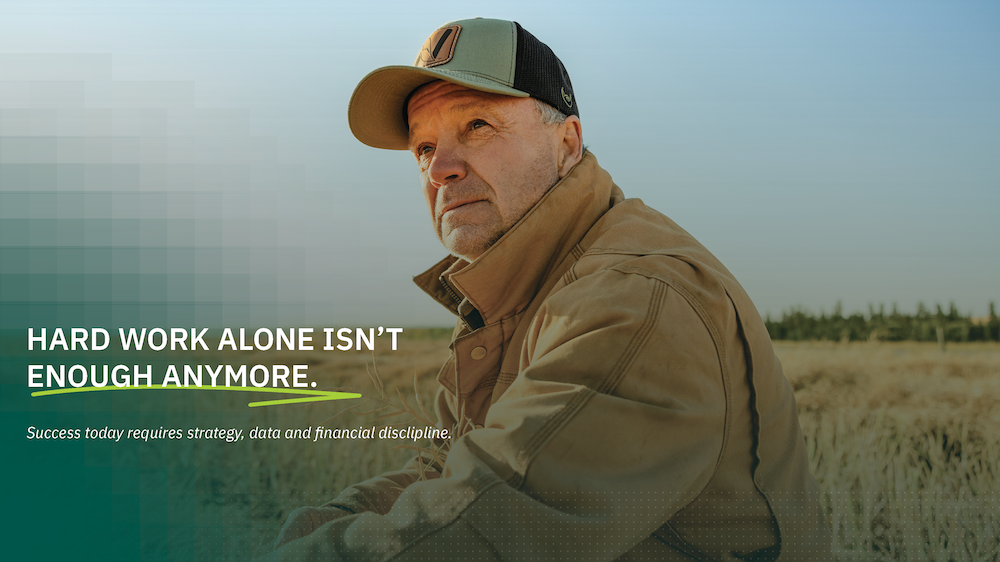
As a result, success in farming can no longer be measured solely by acres farmed or yields achieved. It’s defined by adaptability, informed decision-making and financial resilience. Younger growers have to meet today’s challenges with a different outlook on success than their parents or grandparents. Doing so ensures the industry will evolve and endure for the challenges ahead.
FEATURED LINKS
NEWSLETTER