

Want to stay caught up in all things agriculture? Sign up for the newsletter and get all the latest news straight to your inbox.

Community,
Farm Lifecycle,
Grower Insights,
Integrated Perspectives
Honoring the International Year of the Woman Farmer: Voices from Nutrien Financial
"Historically, women have taken a 'back seat' within the farming industry, often filling what you’d think of as supporting roles, but the reality is women are the backbone of farming families who enable their male counterparts, be it husbands, brothers, fathers, uncles or grandfathers, to focus on growing the crops."
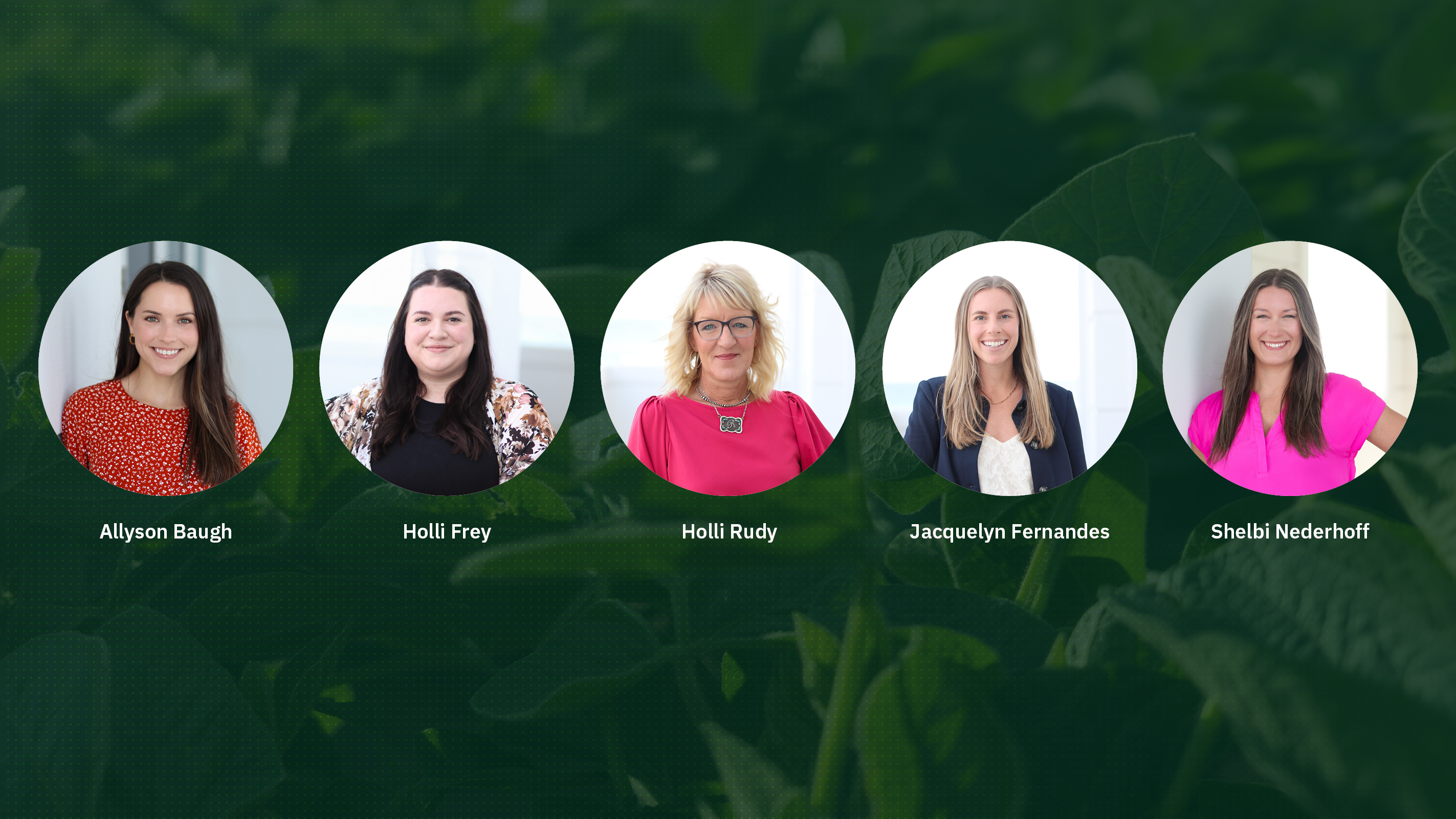
That's how Jacquelyn Fernandes, a Territory Manager at Nutrien Financial, describes what she's seen on farms throughout her career. And she's not alone in recognizing this pattern.
The United Nations has declared 2026 the International Year of the Woman Farmer (IYWF), a global campaign to "recognize women's indispensable yet often overlooked contributions to global agrifood systems." While the initiative is focused on policy reform and investment to advance gender equality throughout agriculture and food production, at Nutrien we also see this campaign as an opportunity to share stories, insights and perspective that spotlight women in ag so we can all recognize just how vital their contributions are. They bring resilience, adaptability, and care for the land. Their impact extends beyond the farm gate through leadership, innovation, sustainability, research and advocacy.
The Evolution of Women's Roles in Agriculture
In the past and still today, women facilitate the success of entire operations from all corners, balancing farm work, business tasks, and family responsibilities.
Traditional narratives celebrate men working in the fields while women work quietly behind the scenes. But that framing overlooks the reality that women have always managed a laundry list of tasks required to keep farms running. From financial planning and fieldwork to family care and decision-making, women bring a versatility to farm operations that makes them invaluable. The far-reaching nature of their expertise may also explain why their contributions have been historically overlooked. Women's work doesn't really fit into neat, specialized titles; it doesn’t tie back to measurable market production as easily as the work men traditionally do, which makes it harder to quantify and qualify expertise.
For more perspective on the reality of women working in agriculture, we turned to our own team at Nutrien Financial and asked about their experiences. Here's what we heard.
Voices from the Field
The versatility of women working in ag shows up in countless ways on modern farms. As Nutrien Financial Territory Manager Shelbi Nederhoff observes, "I think of women as 'the floaters' on the operation. One day they're in the grain cart, the next they're helping load cattle, and then meeting with the accountant for a tax meeting. They are flexible and adaptable, stepping in to fill whatever roles are needed."

Nederhoff’s counterpart in Canada, Holli Frey, agrees, adding that "women are contributing to their operations in increasingly different ways through the many hats they wear – laborer, marketer, cook, decision maker, bookkeeper, to name a few. Don’t underestimate women in ag. All of these roles are vital to the overall success of the industry.”
Building on that versatility, Allyson Baugh, Territory Manager, Nutrien Financial, notes the economic realities behind it:
“We’re seeing a trend right now where it’s harder for women to stay home and raise the children. They have to work and they have to get some non-farm income for their families. It’s not enough to be a good yielder, you also have to be a good marketer and you have to be in tune with finances. There are opportunities for women to do well in a lot of roles now, both on the farm and off the farm.” —
The tendency to label women's versatile skills as 'support' may obscure the true impact of their work. "Women are not playing a supporting role,” says another of our territory managers, Hollie Rudy. “They are decision makers and leaders. They are managing finances, keeping records, developing long-term plans, managing payroll and logistics. Women frequently serve as the communicators and organizers of the operation, ensuring everything runs smoothly while also contributing to physical labor. We balance all of these responsibilities and make critical contributions to the productivity and sustainability of the ag industry."
Rudy’s perspective demonstrates how we can rewrite the traditional narrative and emphasize the influence of women's leadership positions on the farm. During this year of the woman farmer, we can recognize how women are positively impacting the agriculture industry as a whole.
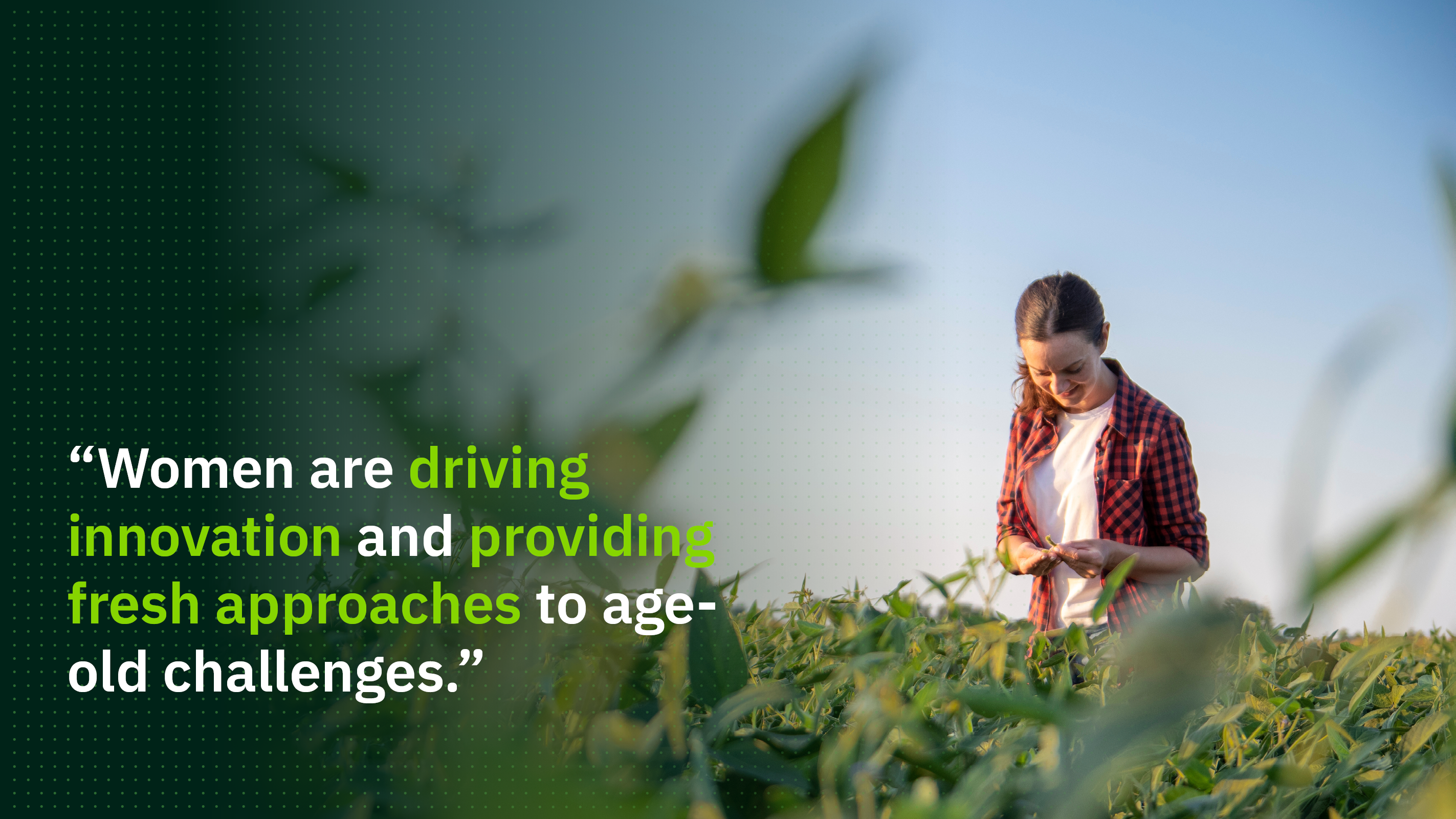
Women are doing work that will push the industry to challenge the status quo. They are driving innovation and providing fresh approaches to age-old challenges.
As Nederhoff points out, "Women bring a different perspective to our industry when it comes to solving problems and introducing new technology. We have a different way of looking at situations that can complement and expand on the male perspective. With a variety of viewpoints, everyone can make meaninstrgful adjustments to keep pace with all the changes in our industry."
At the end of the day, it's women who have helped make agriculture more diverse, progressive, and community-focused. "Over the course of a generation, the world has changed,” notes Rudy. “It's faster paced, our lifestyles are different, and we see women's participation in agriculture changing too. We've improved our value proposition. Women's participation in agriculture is better leveraged today than it was a generation ago."
Cultivating the Future
Women’s role in agriculture is one of quiet strength and indispensable work, which deserves visibility. The challenges facing the ag industry today and in the future are more complex than any other time in history. As farms face mounting pressures from external forces, the full integration of women's leadership, innovation, and multifaceted expertise is essential for future success.
It’s important to remember that the strength of our industry has always resided on the shoulders of people who work the land—regardless of gender. If we engage our collective talents and explore diverse viewpoints, including those from our wives, daughters, sisters, mothers, and grandmothers, we can find solutions and build a more sustainable and resilient future for everyone working in ag.
For more on the International Year of the Women Farmer, visit the Home | International Year of the Woman Farmer (IYWF) 2026 | Food and Agriculture Organization of the United Nations.
FEATURED LINKS
NEWSLETTER