


Want to stay caught up in all things agriculture? Sign up for the newsletter and get all the latest news straight to your inbox.

Capital At Work,
Managing Uncertainty,
Financial Fundamentals
Take Control: Strengthen the Financial Strategy Behind Your Farming Operation
The complexity and volatility of modern agriculture often require a more sophisticated and nuanced approach to managing farm finances. Gone are the days when you could manage the farm’s annual finances using last season’s numbers, using cash reserves and one bank operating line to cash flow your operation for the year ahead.
Farming today can involve more tools, greater attention to financial details and more strategic planning to protect margins and pursue profitability. It starts with an understanding of your financial position and building a capital management plan designed to meet your cash flow needs. By diversifying the sources of capital and matching different financing solutions with specific expenses, you may create additional financial flexibility to help you succeed.
Younger growers tend to understand these nuances in managing today’s farm because they’ve known no other reality. For growers who find themselves mid-career or nearing retirement – who’ve had past success using a more streamlined approach – there may be a benefit to pairing that agronomic expertise with sound business skills, marketing prowess, financial savvy and a comprehensive strategy that connects agronomic goals with economic realities.
Regardless of where you stand, here are three actions you can take today to start building or sharpening those skills.
1) Build a Strategic Capital Management Plan
Today's growers have more options than any other generation when it comes to accessing capital, which is increasingly important as ag lenders have reported tightening underwriting standards and terms. But sometimes having more options makes the challenge of finding the right option more complicated and time-consuming.
This is why capital management planning is so important. Before you shop for financing offers, it can be helpful to budget all of your expenses and determine the most economical way to use your capital.

Get Started:
1. Map out your expenses and cash flow needs month-by-month against your revenue. Consider how payment due dates align with your expected harvest income.
2. Identify expenses you can plan for (e.g., inputs, fuel, labor) and reserve budget for unplanned expenses (e.g., repairs, weather-related adjustments to your input strategy).
3. Evaluate which sources of capital make the most economic sense for each expense. For instance, a bank operating line can be useful when you run into unexpected expenses or time-sensitive opportunities, like a land purchase, whereas paying for inputs with retailer financing can offer beneficial terms that allow you to optimize input application timing.
Once you have an idea of your cash flow needs and what options you have to access capital, researching borrowing costs can give you a clearer picture of the best options. This is a layer of detail that can feel tedious, but it’s important to compare terms, rates and incentives so you’re not overpaying to borrow. This includes a review of origination fees, early payment penalties, post-promotional rates (i.e., a 0% promotional rate that expires mid-season might cost more than a slightly higher fixed-rate option), timing considerations to match payment due dates with your crop schedule, and any other costs that affect your bottom line.
The Takeaway: Creating a customized capital management plan that strategically layers different financing tools like cash, prepay programs, traditional operating lines, and retail financing options, may help you get more value out of every dollar you’re spending. It can also provide a sense of clarity and calm, which Strategic Accounts Manager Allyson Baugh says growers need right now.
“The farm economy can feel overwhelming,” says Baugh. “Careful planning and preparation are key to manage your stress and feel more optimism. If you've been planning the whole year, you have more certainty about your position, where you’re headed and how you’re going to get there. It’s not so stressful to make decisions.”
2) Manage Your Risk
One thing that makes the ag industry unique is the general acceptance of high variability and inherent risk. No two seasons are ever the same, which makes it tempting for growers to avoid long-term planning. Too many variables can change in the span of 5 to 10 years, so instead, many growers may view planning as optional. But the trouble is, this puts you in a reactive position as far as risk management. Assets don’t automatically convert into cash flow without long-term planning, which can help you identify viable business strategies to proactively manage your risk.

Get Started:
1. Stress test your farm financial plan. Know your breakeven point and how agronomic decisions and input purchases can help or hurt your financial position.
2. Build projections using prior years' expenses and inflation trends. Even a rough five-year outlook gives you a baseline to gauge your risk position. Whether you use a spreadsheet or a notepad, committing to that exercise is what matters.
3. Stay in regular contact with all of your financing partners who support your cash flow. Share crop progress updates, yield expectations, and your full debt picture. Transparency shows how you’re managing and minimizing your risk.
The Takeaway: Effectively managing your risk requires intention and focus. Planning ahead and keeping close track of your financial position can help give you a comprehensive view of your operation from a risk perspective – and knowledge is power. Having this view may give you the details you need to make more informed decisions that bring about greater success.
3) Work With Partners Who Understand Your Position
The complexity of modern agriculture means the value of trusted partnerships has never been higher. It’s very difficult for a grower to have deep expertise in all of the areas required for success today.
Not only do you need to understand soil health, rotation strategies, input timing decisions, and technology advances, you also need to have financial acumen and awareness of your balance sheet, breakeven point and liquidity ratio. You don’t have to be an expert in everything if you embrace this integrated perspective and involve trusted experts to help you understand your position and related options.
Get Started:
1. Seek out partnerships that fill your knowledge gaps, either in boosting your production with agronomic insights or impacting your bottom line with business and financial insights.
2. Build relationships with partners who are committed to your long-term goals and who have a vested interest in your ongoing success. Evaluate potential partners based on their track record of supporting growers through the ups and downs over time.
3. Leverage every tool in your toolkit. Ask your partners what resources might help you model different scenarios, evaluate risk and profitability, and make strategic decisions throughout the year. One helpful resource is the Nutrien HUB, a digital portal where you can review different financing offers, terms and conditions to find an option that works for your operation. Sign in or create your account.
The Takeaway: Agriculture is cyclical, and partners who are committed through downturns and recoveries offer better support than those who are focused on working with you from a transactional standpoint. Build connections with partners who understand the nuances of your operation and who can help you make decisions that work both agronomically and economically over time.
Stay Informed and Stay Positive
We're in a challenging phase of the current cycle in ag, but we’ve been here many times before and recovered. While no one can predict when we’ll see a return to a more favorable market for growers, if we look at what history tells us, we can imagine that shift is coming.
While we wait, it’s good perspective to remember what you can control: the preparations you make to respond to conditions; the strategy behind your financing decisions; whether you’re using available financing options effectively; and your outlook.
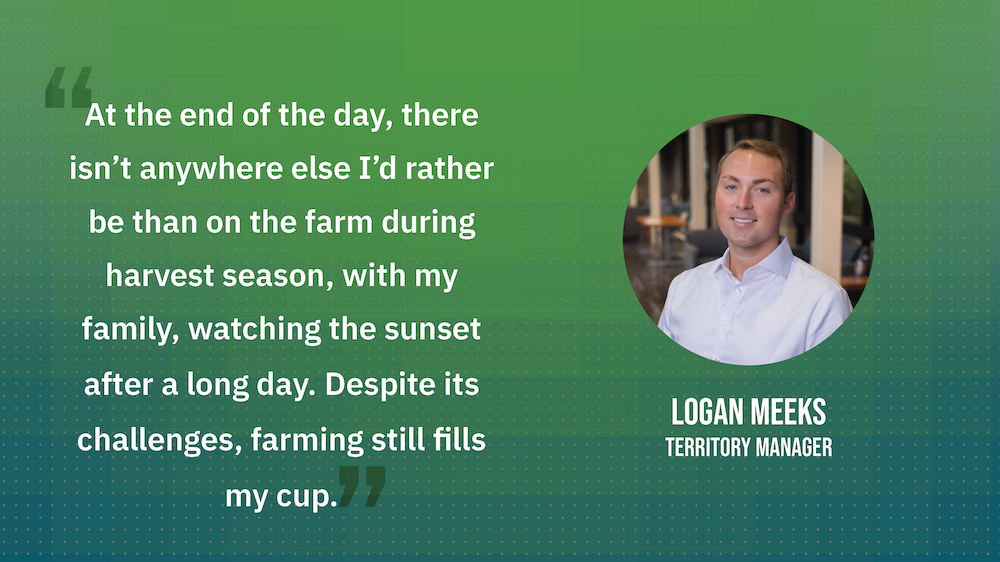
“I’m reminding growers to reflect on how rewarding the ag industry can be,” says Territory Manager Logan Meeks. “You get to do something that has been going on since humans have been around. At the end of the day, there isn’t anywhere else I’d rather be than on the farm during harvest season, with my family, watching the sunset after a long day. Despite its challenges, farming still fills my cup.”
Proactive business practices, strong partnerships, and intentional decision-making can help position you for the next phase of the cycle. So layer capital strategically. Communicate with transparency. Integrate your financial and agronomic plans, and partner with knowledgeable experts who can help you make the most of your effort when the market turns.
Disclaimer: This article is provided for informational purposes only and does not constitute financial advice. Financing strategies and decisions should be evaluated based on individual circumstances.
FEATURED LINKS
NEWSLETTER